With so many different types of forestry mulching equipment, choosing the right one for your project might seem daunting at first. Luckily, at Fecon, we’re well-versed in forestry mulching and know how certain products can impact the efficiency and success of your work. Whether you’re a professional contractor or a property owner, we can lead you in the right direction.
If you are still weighing up the method itself, start with the benefits of forestry mulching. On a 20 to 45 ton carrier, a Severe Duty excavator mulching head mulches material up to 10 inches in a single pass. On an 8 to 15 ton excavator, the Fecon CEM36 handles material up to 6 inches. Once you have settled on mulching, our Bull Hog mulching head guide breaks down every model by carrier and flow.
What Is Forestry Mulching, and How Does a Forestry Mulcher Work?
As a quick refresher, forestry mulchers are powerful machines designed to clear brush, trees, and other vegetation by grinding them into mulch. There are three main types of forestry mulchers: deck mulchers, disc mulchers, and drum mulchers:
- Deck mulchers: Deck mulchers utilize swinging blades to quickly and efficiently cut small vegetation. They excel in managing dense undergrowth, delivering a moderately fine finish. While they can cut larger material into sections, their strength lies in quickly clearing brush, making them an ideal choice for projects requiring speed and efficiency in processing lighter vegetation.
- Disc Mulchers: Disc mulchers utilize a spinning disc with fixed cutting teeth and operate quickly and efficiently. While they can fell larger trees, their primary function is rapid timber processing. They are unmatched in their ability to quickly process standing trees, making short work of material that other types might process more slowly. However, the trade-off for speed is a more coarse finish.
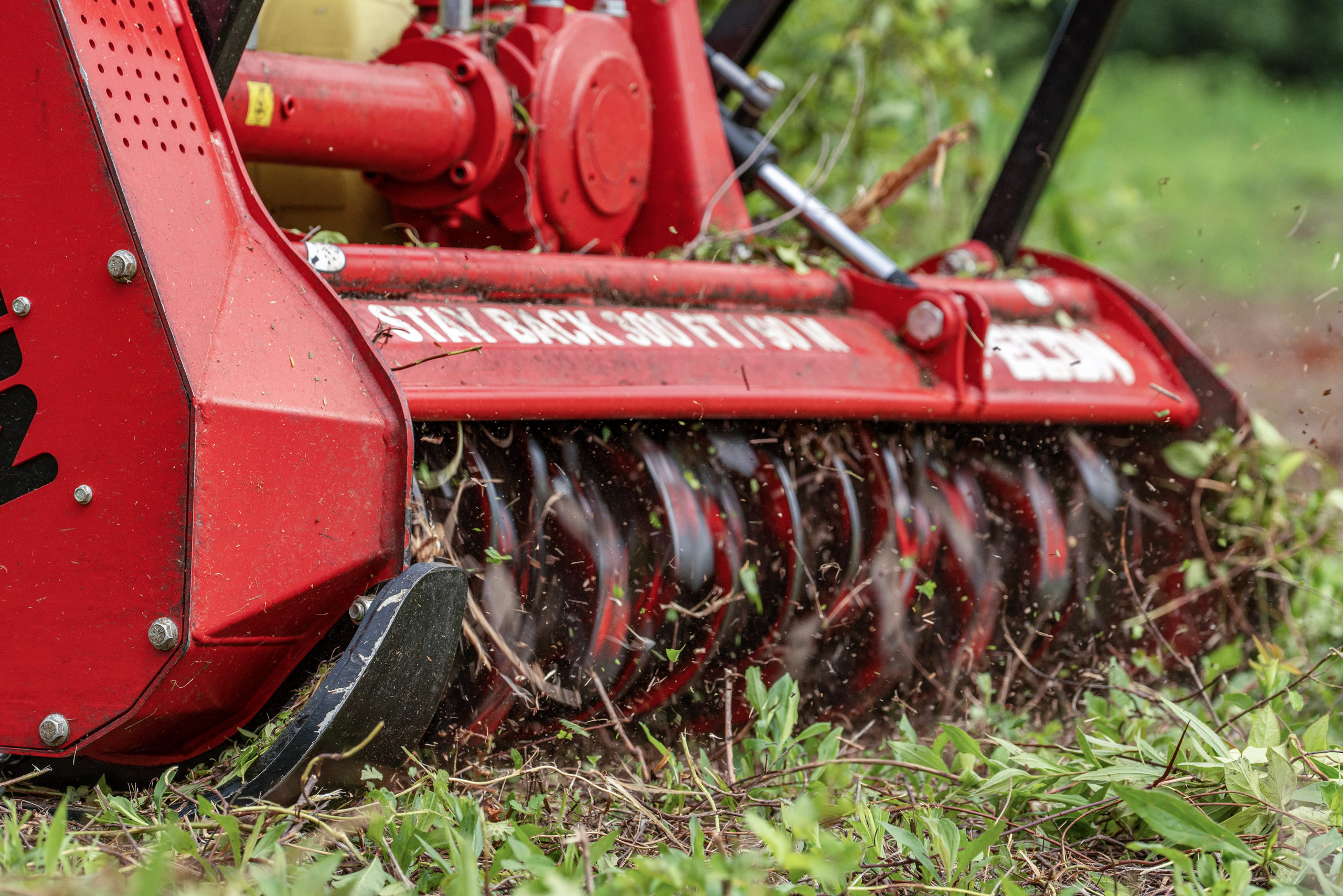
- Drum Mulchers: Drum mulchers offer the most versatility, capable of processing both large and small material effectively. While they might not match the speed of a deck mulcher in clearing brush or a disc mulcher in processing standing timber, they excel at delivering a fine, even finish across various materials. This makes them a go-to choice for operators who need to handle a variety of tasks with a single attachment.
Each is suited for different tasks and terrains, so assess your specific needs first.
Key Features to Look for in a Forestry Mulcher
Now that you know about the different types of mulching equipment, let’s talk about key features to consider when choosing your machine and attachments:
Cutting and Processing Capacities, and Desired Finish
When choosing a forestry mulcher, understanding each type’s cutting and processing capacities is essential, as well as the desired finish you want to achieve. Each shines in different applications; sometimes, a combination of these is necessary to achieve optimal results. Deck mulchers are highly effective for rapidly clearing brush and smaller vegetation, delivering a medium finish. Disc mulchers are unrivaled in high-speed timber processing, excelling with standing trees but leaving a coarser finish. Drum mulchers provide the greatest versatility, handling both large and small materials while offering a fine, even finish across various conditions.
Hydraulic Power and Efficiency
The performance of a forestry mulcher is heavily influenced by the hydraulic horsepower provided by the carrier machine. When selecting a mulcher, it’s crucial to ensure that the carrier offers sufficient hydraulic flow and pressure to match the mulcher’s specifications. Balancing hydraulic power with efficiency not only optimizes performance but also helps in reducing overall operating costs by maximizing productivity while minimizing fuel consumption. On a purpose-built machine such as the FTX200 mulching tractor, the carrier and the head are matched at the factory, so the mulcher circuit gets the full 80 gpm at 5,000 psi it was designed around. On excavators of 20 tons and up, a dedicated diesel hydraulic power unit such as the Fecon BHP270 adds hydraulic horsepower without drawing on the carrier’s own system.
Durability and Maintenance
Durability is critical when it comes to land clearing. Choose mulchers made from high-quality materials designed for longevity. Also, make sure they’re easy to maintain. Look for machines with accessible parts and straightforward maintenance routines to minimize downtime and keep operations running smoothly.
Safety Features
Safety cannot be overstated when it comes to heavy machinery. Choose mulchers with safety features like reinforced cabins, emergency shut-off switches, and protective guards to help prevent accidents and keep everyone safe.
Compatibility
Compatibility is key! Make sure whichever mulcher you choose works with your current equipment, whether it’s an excavator, skid steer, or tractor, to ensure smooth integration and efficient operation.
Tips for Choosing the Best Forestry Mulcher
Choosing the best forestry mulcher involves assessing your specific needs and evaluating different brands and models. Here are some tips to guide you:
Choosing the Best Mulcher for a Skid Steer
If you are running a skid steer, the right mulcher comes down to matching the head to your machine’s hydraulics. Start with your skid steer’s flow rating: standard-flow machines pair with a standard-flow head for brush and saplings, while high-flow machines unlock the power to take on larger trees and dense growth without stalling.
Horsepower matters too, but flow is what actually drives the rotor, so check your machine’s GPM and PSI before you compare models. A drum mulcher is the common choice for skid steers because it delivers a fine, even finish and grinds stumps close to grade, which suits the tight, varied work skid steers usually handle.
Head width should match your carrier’s frame and lift capacity; a head that is too wide or too heavy for your skid steer will fight you instead of working with you. Browse the Bull Hog skid steer heads to compare standard and high-flow options sized for your machine.
Assess Your Land Clearing Needs
Before you decide on a machine, really consider what you need to do. Are you clearing dense forests? Managing underbrush? Maintaining firebreaks? Understanding your needs will help narrow down your search and find the best mulcher for the job.
Evaluate Brands and Models
Research various brands and models, focusing on those known for reliability and performance. We may be biased, but Fecon is renowned for its high-quality forestry mulchers, offering durability and efficiency—no matter the task at hand.
Budget Considerations
A big purchase always requires a look at your budget. While it might be tempting to spend less, investing in a high-quality and reliable mulcher will save you time and money in the long run.
How Much Does a Forestry Mulcher Cost?
A few things drive the price of a forestry mulcher attachment: whether you are buying an attachment for equipment you already own or a purpose-built mulching machine, standard-flow versus high-flow hydraulics, drum versus disc, and the size of your carrier. Higher flow and larger carriers call for a bigger, more capable head, which moves the price up.
One of the biggest decisions is attachment versus machine. A mulching head that mounts to a skid steer, track loader, excavator or tractor you already run is a very different investment than a purpose-built mulching tractor bought specifically for the job. If you already own a compatible carrier, an attachment gets you into mulching for a fraction of what a dedicated machine costs.
If you are weighing hiring a contractor against buying your own equipment, the math usually comes down to how many acres you clear in a year and how often. Occasional or one-time projects often make more sense to contract out. Ongoing land management, right-of-way maintenance, or repeat clearing work is where owning a mulcher starts to pay for itself.
Sticker price is only part of the picture. Total cost of ownership includes tooth wear and replacement, routine maintenance, and fuel, and this is where build quality makes the biggest long-term difference. A well-built mulcher with durable teeth and simple maintenance costs less to run over its life, even if the upfront price is higher.
Because pricing depends on your carrier, flow, and the head that fits your work, the most accurate way to get a number is to request a quote. Tell us your machine and what you are clearing, and we will put together pricing for the right setup.
Read Reviews and Testimonials
Put your trust in people who have taken on similar projects. Their reviews and testimonials can provide essential insights into the performance and reliability of different mulchers. Pay attention to feedback on durability, efficiency, and ease of use.
Common Mistakes to Avoid When Choosing a Forestry Mulcher
We’ve told you some key factors to consider when shopping around for a mulcher, but knowing what common mistakes to avoid can be just as helpful. Here are some pitfalls to watch out for:
Choosing the Wrong Type of Mulcher
Choosing the wrong mulcher can muck up your work and slow things down. For example, a disc mulcher isn’t great for heavy-duty forest clearing— a drum mulcher would do a better job (but you know that now).
Underestimating Power Requirements
A mulcher with insufficient power can struggle with tough vegetation, leading to slower progress and increased wear and tear. Ensure the mulcher you choose has adequate horsepower for your tasks.
Overlooking Safety Features and Operator Comfort
Skipping safety features can lead to accidents and injuries. Also, ignoring a machine’s comfortability can make you tired and less productive. So, go for mulchers with good safety features and comfy designs.
Choose A Fecon Forestry Mulcher for Your Land-Clearing Needs
Picking the right forestry mulcher is a big deal for your land-clearing projects. Now that you know about the different types of mulchers, what features matter, and what mistakes to avoid, choosing the right one will be a breeze. Before you buy, ask a forestry mulcher dealer near you whether you can see the head working on your own carrier.
Fecon has reliable and efficient mulchers for all sorts of needs, making us a top choice for professionals and property owners alike. Reach out today and take your land management project to the next level.
Drum Mulcher vs Disc Mulcher: Which Should You Choose?
Both grind vegetation into mulch, but they work differently. A drum mulcher carries carbide or steel teeth on a rotating drum that pulls material down and leaves a fine, even mulch. It keeps debris on the ground, gives good operator visibility, and can grind stumps close to grade, which makes it the common choice on skid steers and compact track loaders.
A disc mulcher spins a large disc that fells and cuts fast, so it shines on high-production clearing of standing trees, but it leaves a coarser finish.
Choose a drum for a fine finish and versatile clearing, and a disc when raw felling speed on larger volume is the priority.
Specifications
| Key Features | Drum Mulcher | Disc Mulcher |
|---|---|---|
| Finish | Fine, even mulch | Coarser finish |
| Best For | Versatile clearing, stump grinding close to grade | High-production felling of standing trees |
| Common On | Skid steers, compact track loaders | Standing timber operations |
| Speed | Steady, controlled | Fastest felling speed |