Brush Cutter vs Brush Grapple: Which One Your Crew Needs
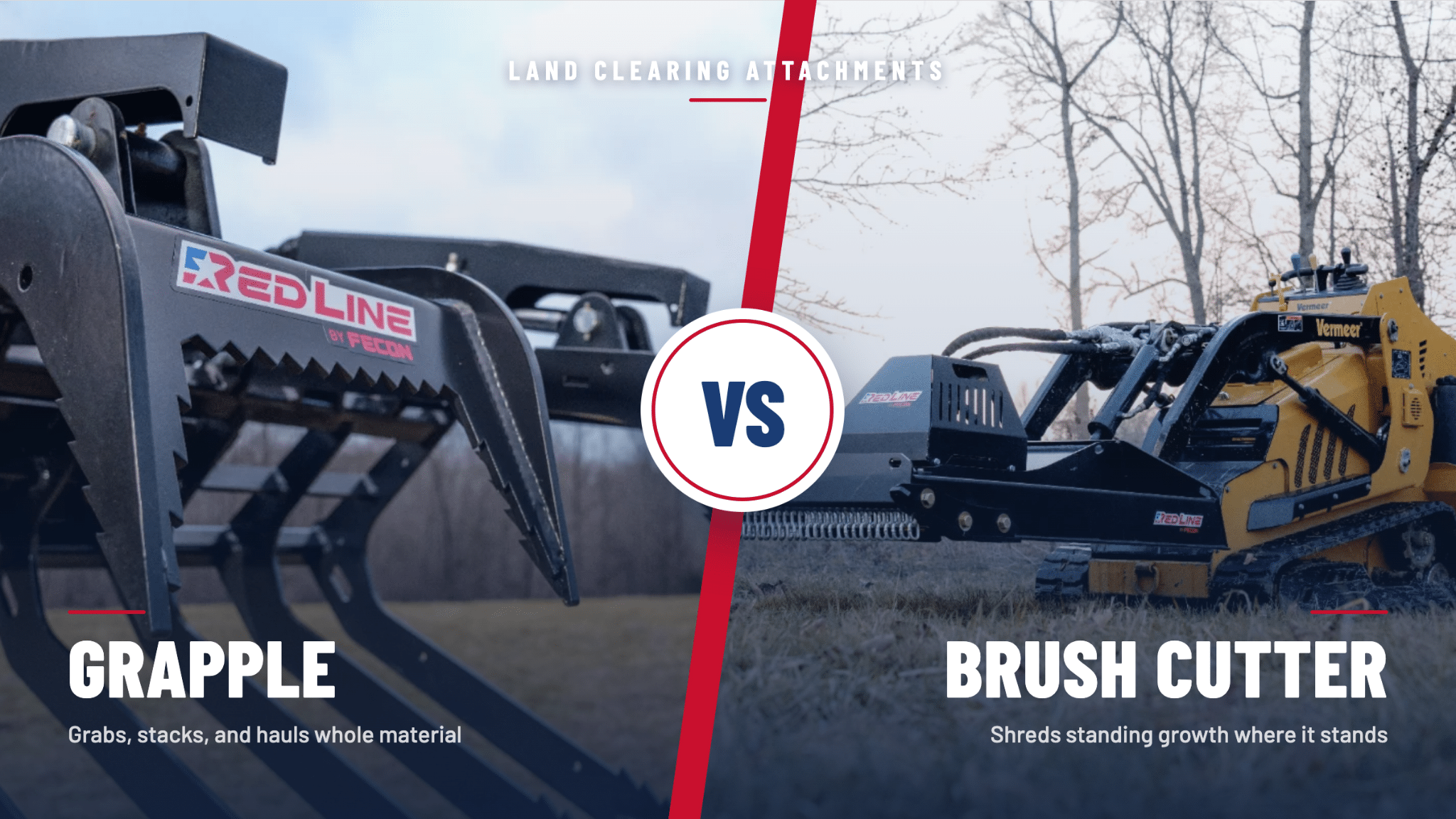
A brush cutter cuts standing vegetation. A brush grapple picks up and moves material that’s already down. They solve opposite halves of the same job, which is why crews clearing a corridor or a storm-damaged site often run both.
Worth clearing up before anything else: both of these are hydraulic attachments that mount to a skid steer, compact track loader, mini skid steer or excavator. Search for “brush cutter” and you’ll get a lot of results about handheld gas trimmers with metal blades. Different tool, different category, not what this is about.
What a Brush Cutter Does
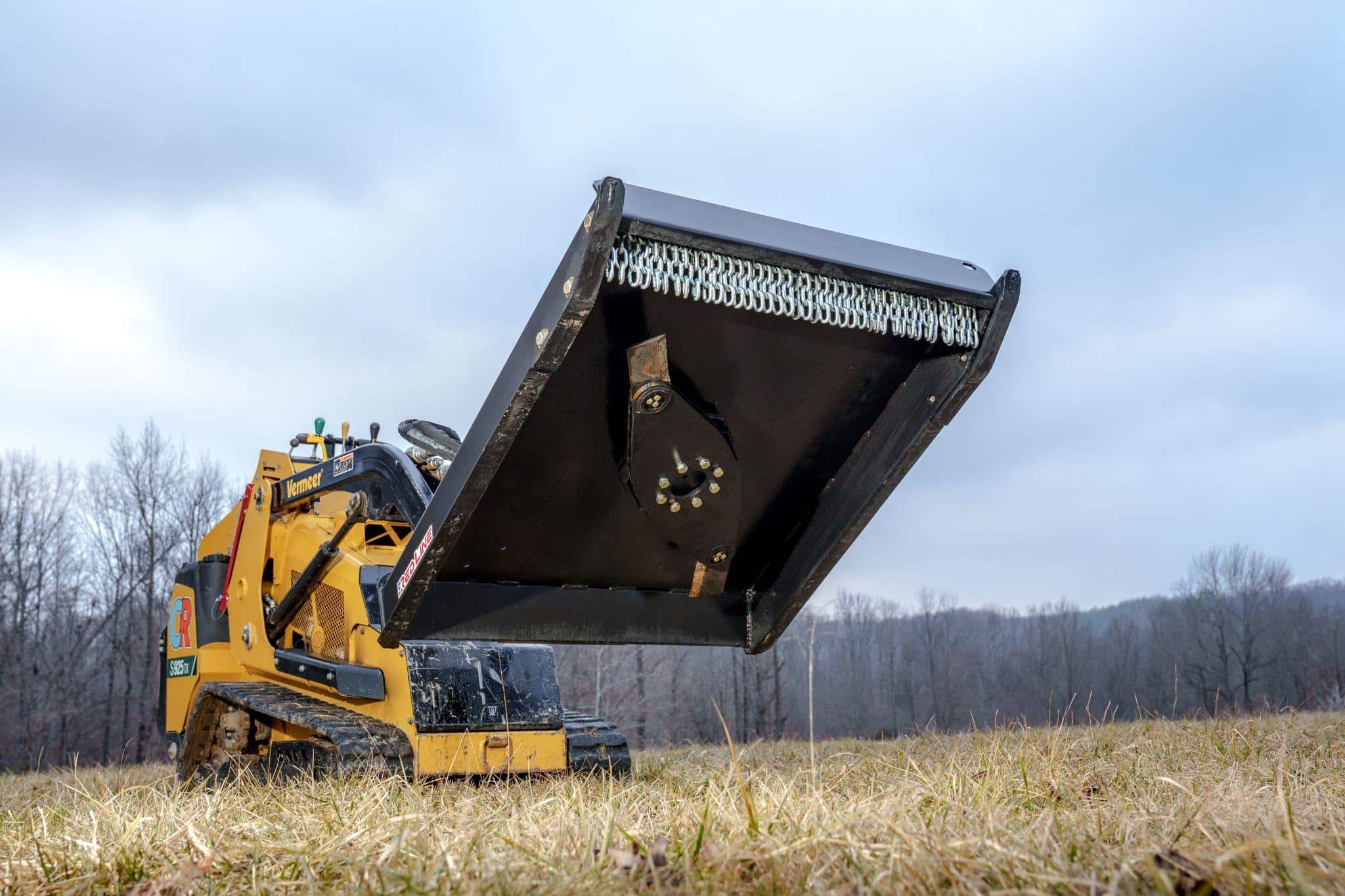 A brush cutter is a rotary deck with blades spinning underneath. You drive into standing material and it cuts. Saplings, heavy brush, briars, small trees, overgrown fence lines, anything vertical that needs to come down.
The Red Line skid steer brush cutter comes in 60-inch and 74-inch working widths and handles material up to 6 inches. It runs on 10 to 50 GPM across 50 to 135 horsepower carriers, which covers most standard-flow skid steers and track loaders without requiring a high-flow machine.
You do not need high flow to run a brush cutter. High flow keeps blade speed up under heavy load and recovers faster when you bog down in dense material, which matters if you’re clearing thick stands all day. For fence lines, roadside work and general overgrowth, standard flow does the job.
What a brush cutter leaves behind is the thing people underestimate. It cuts material off but it doesn’t process it. You end up with a mat of cut brush, limbs and stems lying on the ground. Sometimes that’s fine and you leave it. Sometimes it has to come off the site, and that’s where the second attachment comes in.
What a Brush Grapple Does
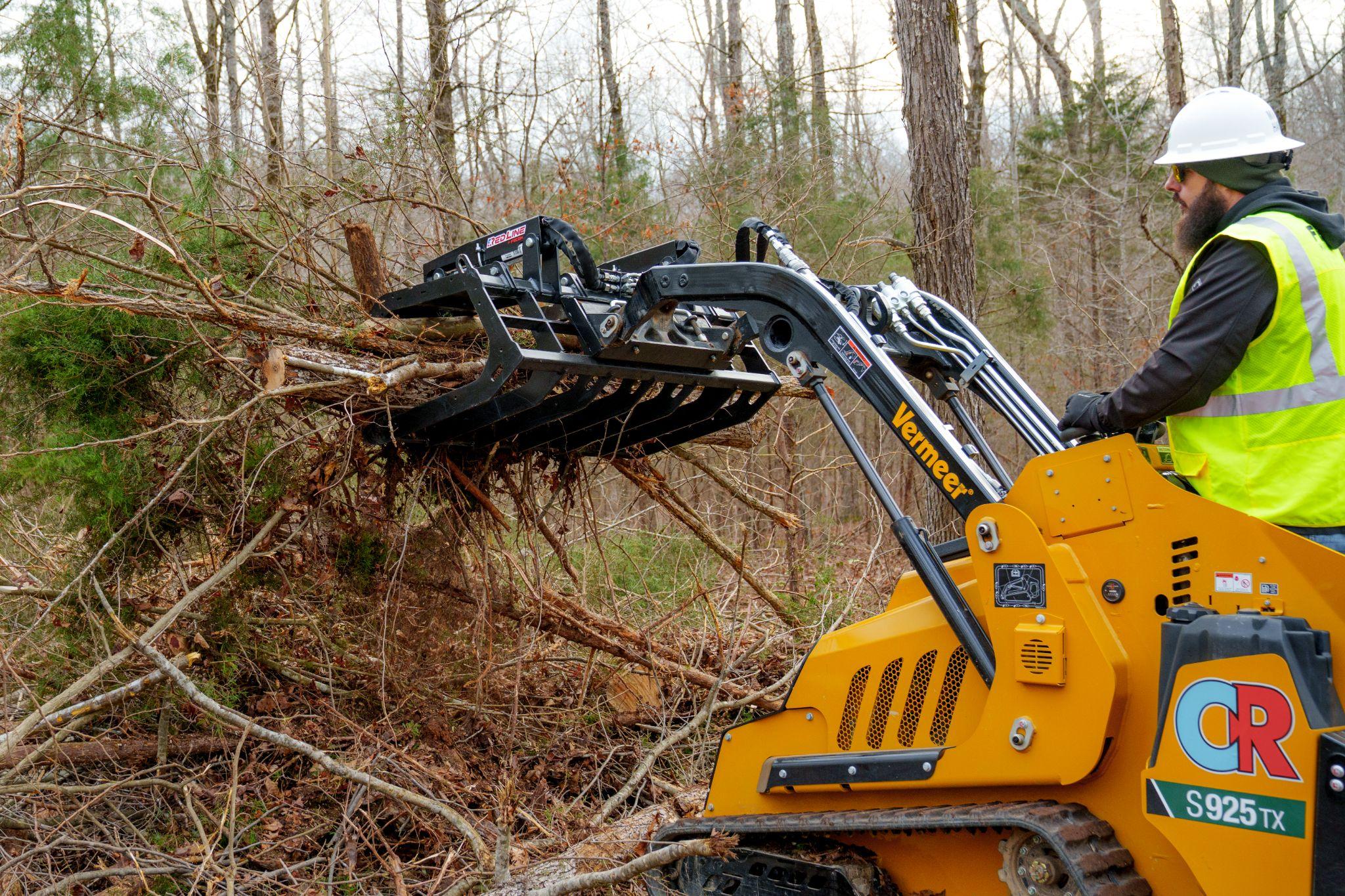 A brush grapple is a set of tines with hydraulic lids that clamp down on top. It grabs, lifts and carries. Brush, limbs, logs, storm debris, whatever’s on the ground that needs to end up somewhere else.
The tines are spaced apart on purpose. Dirt and small material falls through, so you’re hauling brush instead of a bucket full of soil. That keeps your dump weight down and means fewer trips.
The Red Line skid steer brush grapple uses dual independent lids, which is the feature that separates a good grapple from a frustrating one. Brush piles are never even. Grab a load where one side sits higher than the other and a single lid catches on the high spot and lets the rest slide out. Two lids close independently and hold both sides. Fewer dropped loads, less repositioning, less time.
The BG84 runs 84 inches wide with a 60-inch jaw opening at 990 pounds, sized for full-size skid steers and compact track loaders. The BG48 is 48 inches at 350 pounds for mini skid steers.
The Short Version
| Key Features | Brush Cutter | Brush Grapple |
|---|---|---|
| What it does | Cuts standing material | Moves downed material |
| Material state | Vertical, rooted | Cut, fallen, piled |
| Typical use | Fence lines, corridors, overgrowth, fuel reduction | Storm cleanup, slash removal, site clearing, loading |
| What’s left after | Cut brush on the ground | A cleared surface |
| Handles logs | No | Yes |
| Handles standing trees | Up to about 6 inches | No |
Three Questions That Decide It
Is the material standing or down? Standing means cutter. Down means grapple. That one question resolves most jobs.
Does the material have to leave the site? If cut brush can stay where it falls, a cutter alone finishes the job. If the site has to be clean, or the material is a fire hazard, or you’re prepping for grading, you need a grapple too.
Are there logs or heavy timber in the mix? A cutter won’t touch them. A grapple will move them. If it’s mostly timber rather than mixed brush, a dedicated log grapple holds round material better than a brush grapple does.
Where Each One Earns Its Keep
Right of Way and Corridor Maintenance
Roadside, powerline and pipeline corridors get cut on a cycle. The cutter does the recurring work. The grapple comes out when a cycle gets missed and there’s enough accumulated material that it can’t stay in the corridor. Most utility and municipal crews doing right of way work run both and use them at different points in the season.
Storm Response
This is grapple work almost entirely. The trees are already down. What you need is something that can grab awkward, tangled, uneven loads fast and clear a road or a yard. The cutter only matters when you’re dealing with what’s left standing and damaged afterward.
Fuel Reduction and Fire Mitigation
Both, in sequence, and the sequence is the point. Cutting ladder fuels and leaving them on the ground moves the fuel load rather than removing it. If the objective is reducing what’s available to burn, the material has to come off. Cut first, then haul.
Fence Lines and Pasture Reclamation
Usually the cutter alone. Brush along a fence line gets cut and left. The grapple comes in when there’s old wire, posts, or several seasons of accumulated growth that needs to be pulled out and piled.
Site Prep
Both. You can’t grade over a mat of cut brush, so site prep almost always means clear it, then move it.
Running Both: Order Matters
Cut first. Haul second. It sounds obvious and crews still get it backwards.
Trying to grapple standing brush wastes time and puts side loads on your tines that they aren’t built for. You end up wrestling material that’s still rooted. Cut it loose first, let it fall, then come back with the grapple and take out large armfuls at a time.
The other reason to work in that order is pile placement. If you cut with a plan for where the material goes, you can drop it in a way that makes the grapple pass fast. Cut toward your pile location. It’s a small habit that takes real time off a job.
Matching the Attachment to Your Machine
Two things to check before you order anything.
Hydraulic Flow
A brush cutter needs enough GPM to keep blade speed up. Buy a cutter rated well above your machine’s output and it bogs. Buy one rated well below and you’re leaving performance on the table. The Red Line skid steer cutters cover 10 to 50 GPM, which is a wide enough band that most standard and high flow machines work.
Weight Against Lift Capacity
This is where grapples get people. Every pound of attachment is a pound you can’t lift in material. Hang a 990-pound grapple on a machine with limited loader capacity and you’ve spent most of it on the tool. Match the attachment class to the carrier class. Mini skid steers get the mini skid steer brush grapple and the mini skid steer brush cutter, not the full-size versions.
Width should roughly match your carrier so you’re not pushing material with your tires or tracks.
When Neither One Is the Right Call
You want the material gone, not moved. A mulcher processes standing vegetation into chips in one pass and leaves them on the ground as cover. No cutting, no hauling, no pile. If the site can accept mulch and you’d rather not make two passes with two attachments, a Bull Hog mulcher is the better tool. It costs more and asks more of the machine. Ourguide on choosing a forestry mulcher walks through where that line sits.
You’re pulling roots and stumps. That’s a root grapple. Shorter tines, lower profile, built to get under the soil surface and pry. A brush grapple works above ground. Ask it to dig and you’ll bend something.
You’re scooping loose material. Mulch, gravel, soil. That’s a grapple bucket with a solid bottom. Open tines are for brush, and everything small falls through by design.
Frequently Asked Questions
Q1. What’s the difference between a brush cutter and a brush grapple?
Q2. How thick of material can a skid steer brush cutter handle?
Q3. Do I need a high flow skid steer to run a brush cutter?
Q4. Are brush cutters hard on skid steers?
Q5. What’s the difference between a brush grapple and a root grapple?
Q6. How is a brush grapple different from a grapple bucket?
Q7. Do I need both a brush cutter and a brush grapple?
Getting the Right One
If the material is standing, start with the skid steer brush cutter. If it’s already down, start with the skid steer brush grapple. If your work involves both, most crews buy the cutter first and add the grapple once the material starts piling up.
Both are part of the Red Line attachment line, built on the same land clearing engineering Fecon has been doing for decades. Send us your carrier make and model and we’ll confirm the fit before you order.