Maintaining right-of-way for roads, highways, power lines, communication lines, and other utilities has its own share of
challenges. The demands of the job, the difficulty of the terrain, finish, and maintenance requirements will determine
the equipment selected for the job. For utility and highway crews, a 12-20
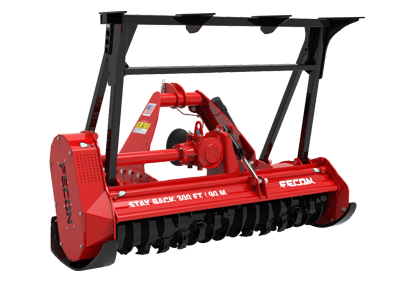
ton excavator mulching head handles the reach this work demands. On heavier corridor work behind a 20 to 45 ton
machine, the Severe Duty excavator mulcher attachments
carry the same reach with a larger rotor and heavier bearings. Most right of way work
runs on the same tools as general forestry attachment work. Clearing along field edges and
farm lanes? See our farm attachments range.
In right-of-way work, maintaining safe traffic flow is a consideration not often found in other types of land clearing
jobs.
Roadside vegetation management can become a priority where line of site is inhibited by vegetation, dead vegetation, or
trees posing a risk to travelers. Excavator mulching attachments work well in roadside vegetation management and can be
coupled to most excavators in the 5-45 metric ton range and, if equipped with rubber tracks, can easily travel over
paved roads.
For selective clearing where reach matters, a tree shear attachment on an excavator
boom can cut and hold stems along the shoulder without the machine leaving level ground.
Power Line and Utility Right-of-Way Clearing Equipment
Power line clearing has two jobs: opening an overgrown corridor, then keeping regrowth below the clearance the line needs. The right power line clearing equipment depends on the width of the corridor, the terrain and how close the work runs to energized conductors.
Pipeline and roadside corridors use the same tools; see our solar and pipeline applications and the full guide to right-of-way clearing equipment. Work near energized lines must follow OSHA’s line-clearance tree trimming rules and minimum approach distances.
Frequently Asked Questions
Q1. What is right-of-way clearing?
A right-of-way is the corridor of land set aside for infrastructure such as power lines, pipelines,
roads, and rail. Right-of-way clearing is the work of removing and then maintaining the vegetation
inside that corridor so the infrastructure stays safe, accessible, and reliable. For utilities, keeping
trees and brush clear of transmission and distribution lines reduces outage and fire risk and keeps
crews able to reach the equipment. The work splits into initial clearing of an overgrown corridor and
recurring maintenance to keep regrowth in check, and forestry mulching is widely used for both because
it processes vegetation in place across long linear stretches.
Q2. What mulching equipment is best for right-of-way and utility corridor maintenance?
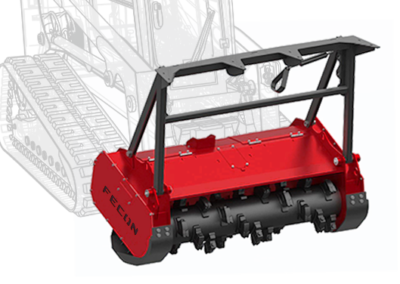
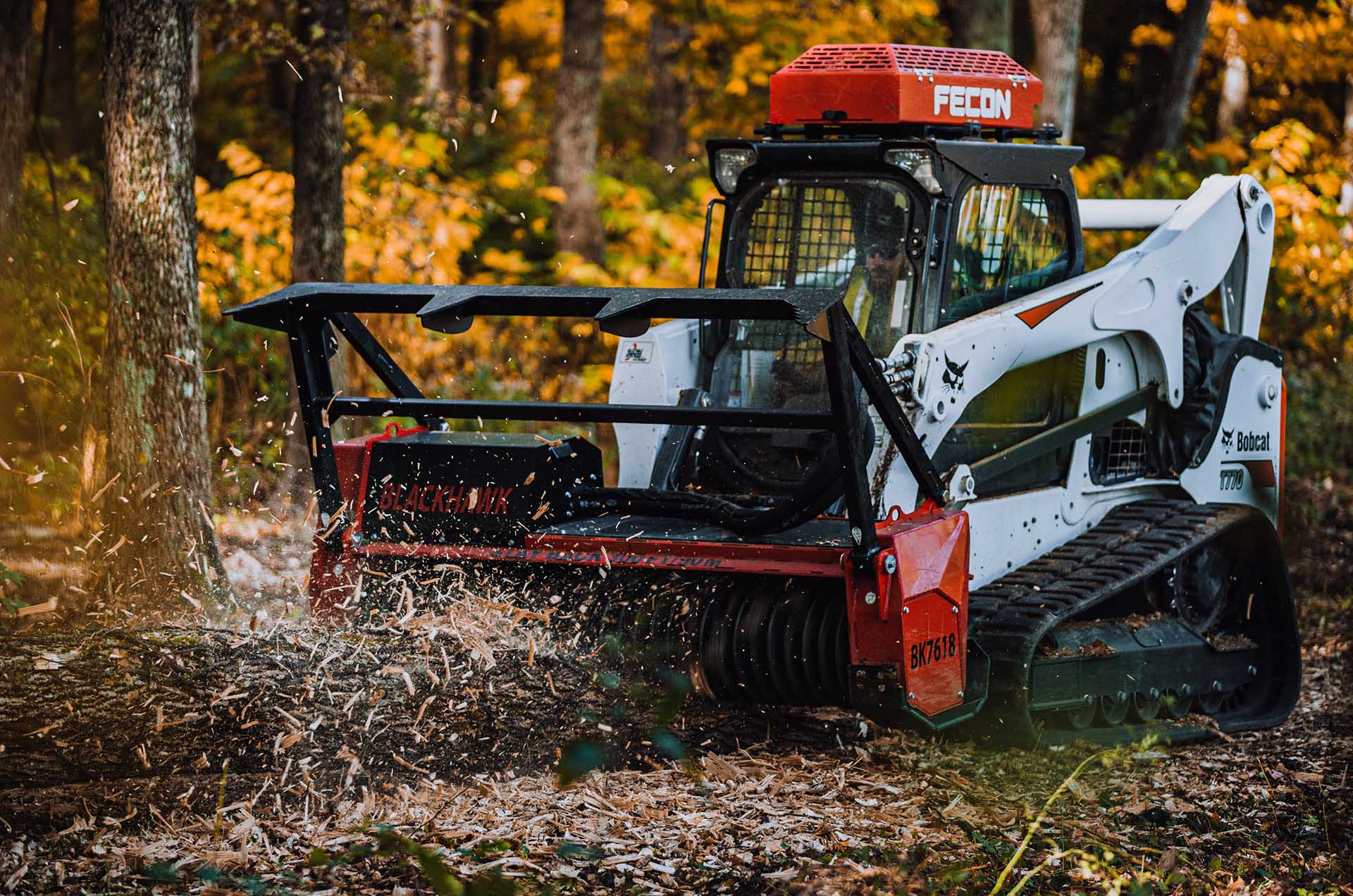
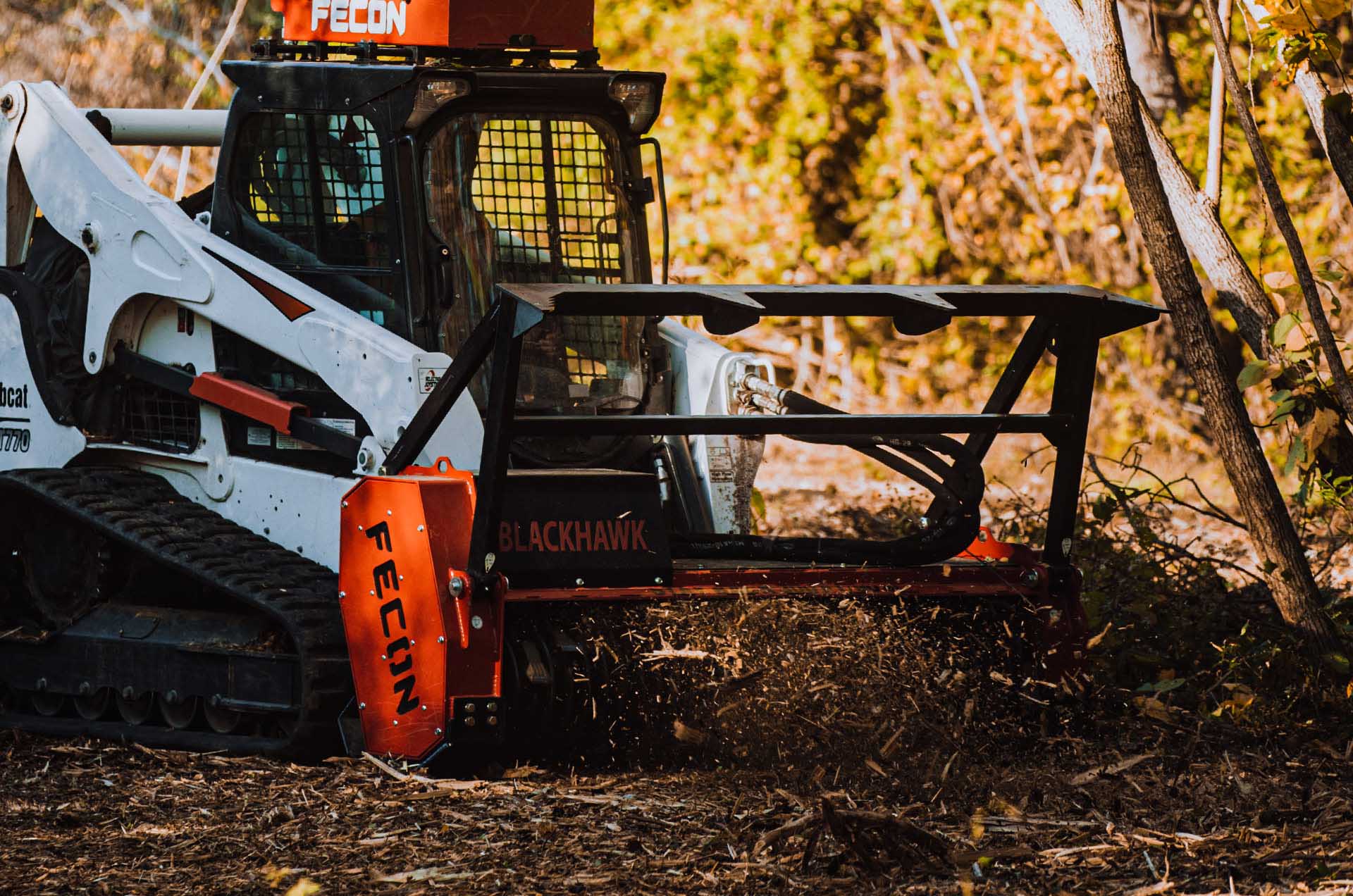
The right choice depends on terrain and access. For long, relatively open corridors, high-flow mulching
heads on compact track loaders and Fecon’s purpose-built mulching tractors cover ground efficiently. For
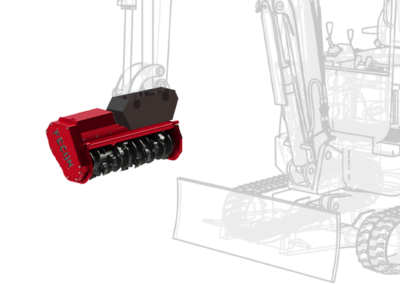
corridors on slopes, along waterways, or with restricted access, excavator-mounted mulching heads add
reach and precision so operators can work from a stable position and treat vegetation they could not
drive up to. Because right-of-way work is repetitive and hard on equipment, contractors tend to favor
forestry-grade heads that hold cutting speed under load and are backed by dependable parts support,
since downtime on a linear job is costly. Matching head flow class to the vegetation is the key
decision.
Q3. How often does right-of-way vegetation need to be maintained?
It depends on the growth rate of the local vegetation, the type of corridor, and the operator’s
clearance standards, so cycles vary from roughly every couple of years to longer intervals in
slower-growing regions. Fast-growing brush and species that resprout aggressively push the cycle
shorter. One advantage of mulching is that grinding vegetation and leaving a mulch layer can slow how
quickly some brush returns compared with simply cutting it, which can stretch the maintenance interval.
A vegetation-management plan usually sets the schedule based on how fast the corridor grows back and the
safety clearances the infrastructure requires.
Q4. Why use mulching instead of mowing or spraying for right-of-way work?
Each method has trade-offs, but mulching handles a wider range of material in one operation. Mowing
struggles with anything beyond light brush and leaves larger stems standing, and spraying manages
regrowth chemically but does not remove existing woody vegetation and carries its own regulatory and
public-perception considerations. Forestry mulching cuts and grinds standing brush and small trees in a
single pass, leaves a mulch layer that helps suppress regrowth and control erosion, and processes
everything in place with no hauling. For corridors with real woody growth, that combination of thorough
removal and in-place processing is why mulching is often the preferred approach.
Q5. What equipment is used for power line right-of-way clearing?
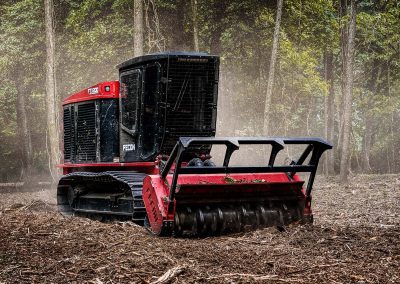
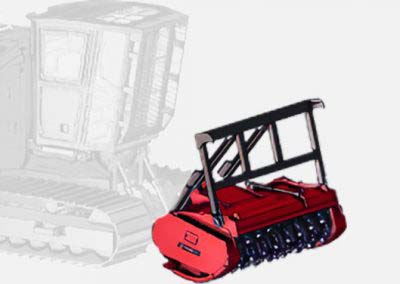
Most power line and utility corridors are cleared with three types of machine. High-flow mulching heads on compact track loaders and purpose-built mulching tractors such as the Fecon FTX200, fitted with a 200+ HP Bull Hog tractor mulching head, cover long, open stretches. Excavator mulching heads, typically on 12 to 20 ton machines, reach slopes, ditches and the edges of the corridor from stable ground. Tree saws such as the Fecon Trim Ex trim overhanging limbs from the cab. Work near energized lines must follow OSHA’s line-clearance rules and the minimum approach distances that apply to your crew.
Q6. What size excavator mulcher do I need for right-of-way work?
It depends on the reach you need and the size of the material. For utility and highway crews, a 12 to 20 ton excavator mulching head is the common choice. Heavier corridor work behind a 20 to 45 ton machine calls for a Severe Duty excavator mulcher with a larger rotor and heavier bearings. Fecon also builds a 3.5 to 10 ton head for smaller carriers working tighter access points. Between the two, the CEM36 is built for 8 to 15 ton excavators that need a lighter head at full reach. Your dealer can match the head to your excavator’s hydraulic flow.