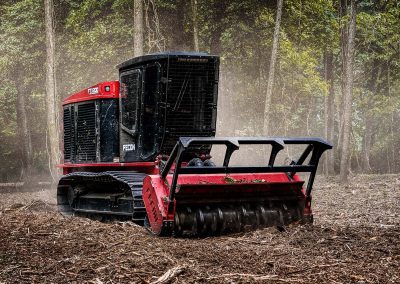
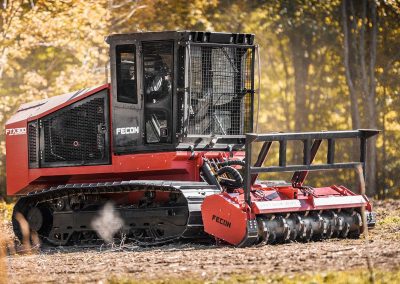
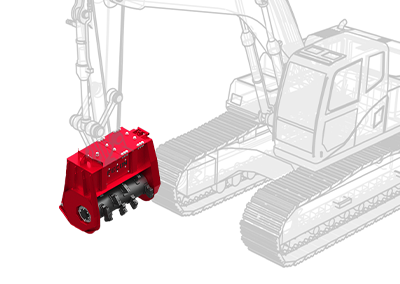
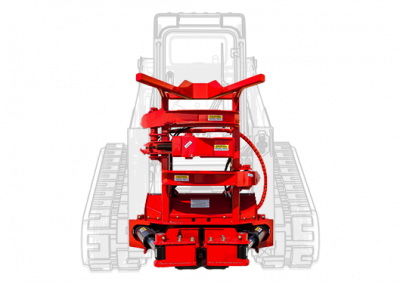
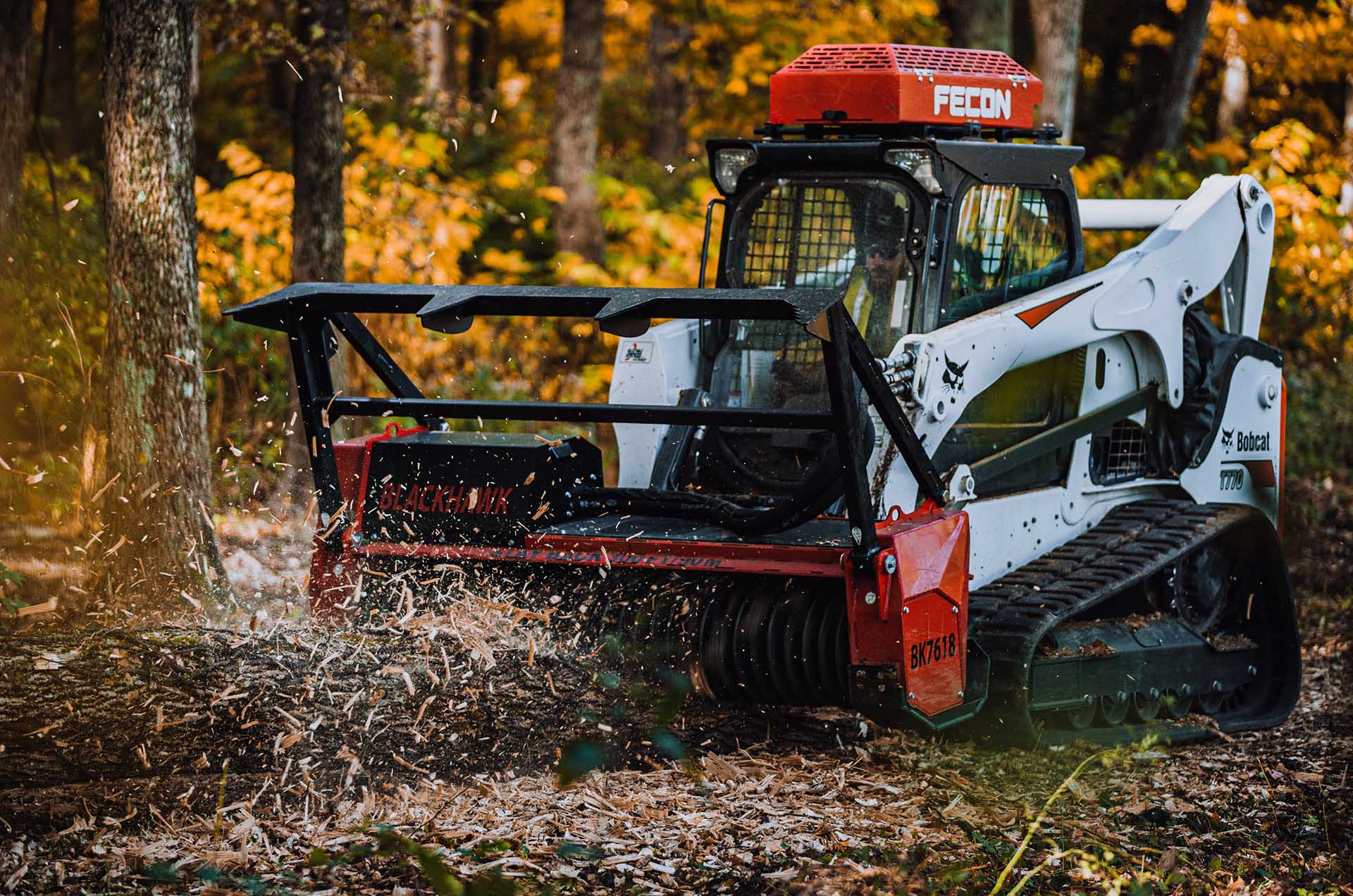
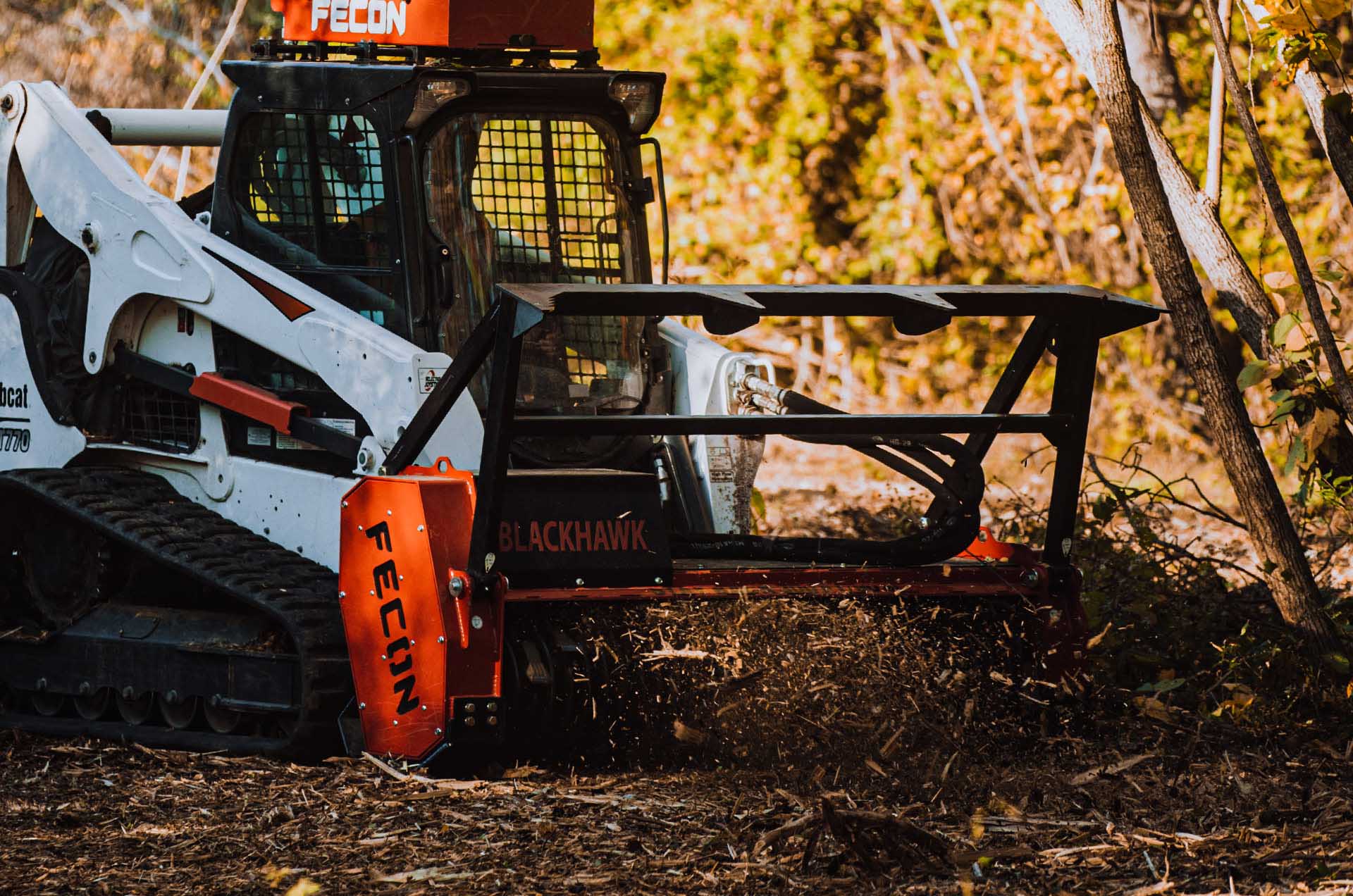
On the proactive front, Fecon offers tracked forestry mulching tractors, hydraulic mulching heads, and excavator-mounted mulching attachments. All of this equipment can be used to remove underbrush that can quickly escalate a fire. Forestry mulchers and other forestry attachments can also be used to form firebreaks and defensible zones near inhabited areas. All of these sit in our forestry attachment range.
During an active wildfire, forestry mulchers are a valuable addition to traditional bulldozers in creating fire lines and breaks. By mulching material directly into the ground, trees and mineral soils are not pushed outside of the line and can reduce post-fire costs to rehabilitate the area. Depending on the terrain, vegetation, environmental impact, and travel speed requirements, the flexibility of using forestry mulching equipment is extremely helpful.
In the clean-up stages and for silviculture, Fecon forestry equipment can help provide a top layer of mulch to prevent erosion and can be used to reduce and blend slash into mineral soils to improve decomposition and provide enhanced soil conditions for establishing seedlings.
An excavator masticator head reaches ground too steep to walk a tractor across for fuel reduction work. For agency and contractor crews running 20 to 45 ton carriers, the Severe Duty excavator masticator heads are built for that down pressure.
A tree shear works well for this kind of selective thinning, letting an operator shear and bunch standing stems without leaving the cab.
Frequently Asked Questions
Q1. How does forestry mulching help prevent wildfires?
Wildfires spread on fuel: dry brush, dead trees, and dense undergrowth. Forestry mulching reduces that fuel load by grinding the vegetation into a mulch layer on the ground, which lowers the amount of combustible material and the intensity and speed a fire can build. Because the material is processed in place, there is no burning or hauling of slash, which itself removes a fire risk. Mulching is used to thin overgrown stands, remove ladder fuels, and open up the landscape so a ground fire is far less likely to climb into the canopy. It is one of the most efficient tools for large-scale fuel reduction.
Q2. What is defensible space, and how do I create it?
Defensible space is a managed buffer around a structure that slows an approaching fire and gives firefighters a safer place to work. It is planned in zones: the area immediately around the home is kept clear of flammable material, the intermediate zone out to about 30 feet has vegetation spaced and dead growth removed, and the extended zone from roughly 30 to 100 feet is thinned and kept low. Forestry mulching creates and maintains these zones quickly by clearing brush and thinning trees over large areas, which is far more practical than hand crews when you are protecting acreage in the wildland-urban interface.
Q3. What are ladder fuels, and why does removing them matter?
Ladder fuels are the low and mid-level vegetation, shrubs, small trees, and low branches, that let a fire on the ground climb up into the tree canopy. Once a fire reaches the canopy it becomes a crown fire, which moves faster and is far harder to control. Forestry mulching targets exactly this layer, grinding out the intermediate brush and small trees so there is a gap between the ground and the canopy. Breaking that vertical continuity is one of the most effective things a landowner can do to keep a manageable ground fire from turning into a destructive crown fire.
Q4. What Fecon equipment is used for wildfire mitigation and firebreaks?
Fecon builds equipment specifically for fuel reduction and fire work. The FTX150-2 mulching tractor, offered with a fire package, is used to cut firebreaks and defensible zones and has been run alongside land-management and firefighting crews on real mitigation projects. Alongside it, Fecon’s hydraulic mulching heads on skid steers and compact track loaders and its excavator-mounted heads let contractors and agencies remove underbrush, thin ladder fuels, and open corridors across varied terrain. Together they give fire-mitigation crews the ability to reduce fuel loads and build defensible space efficiently over the large areas that wildfire prevention usually demands.